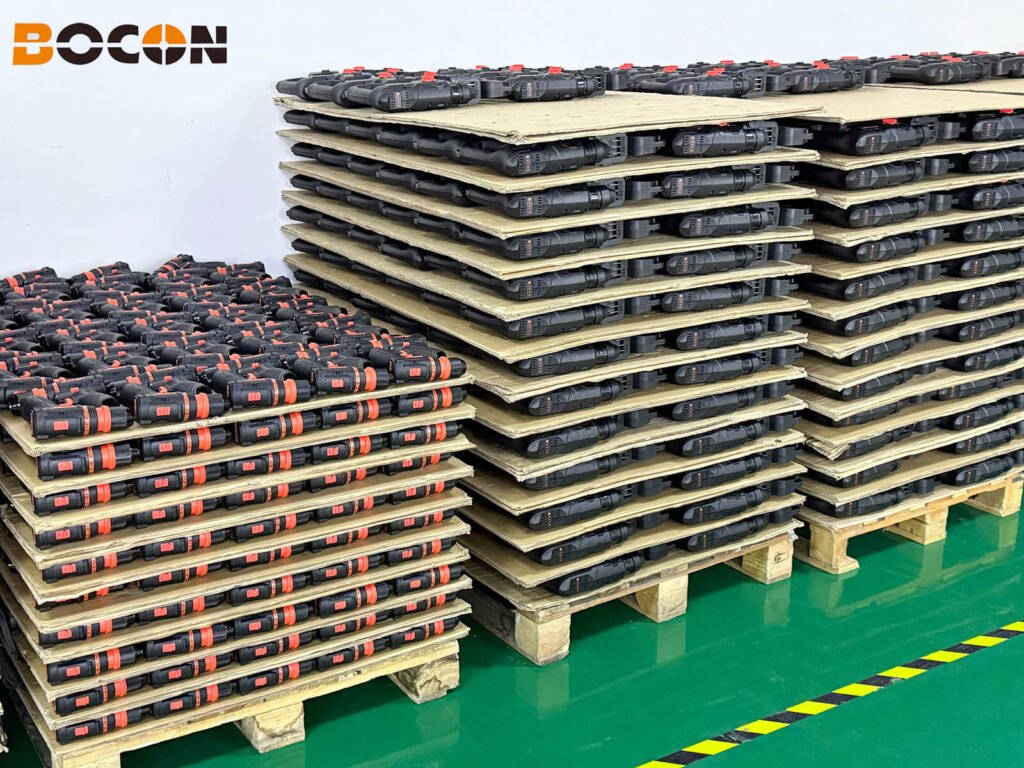
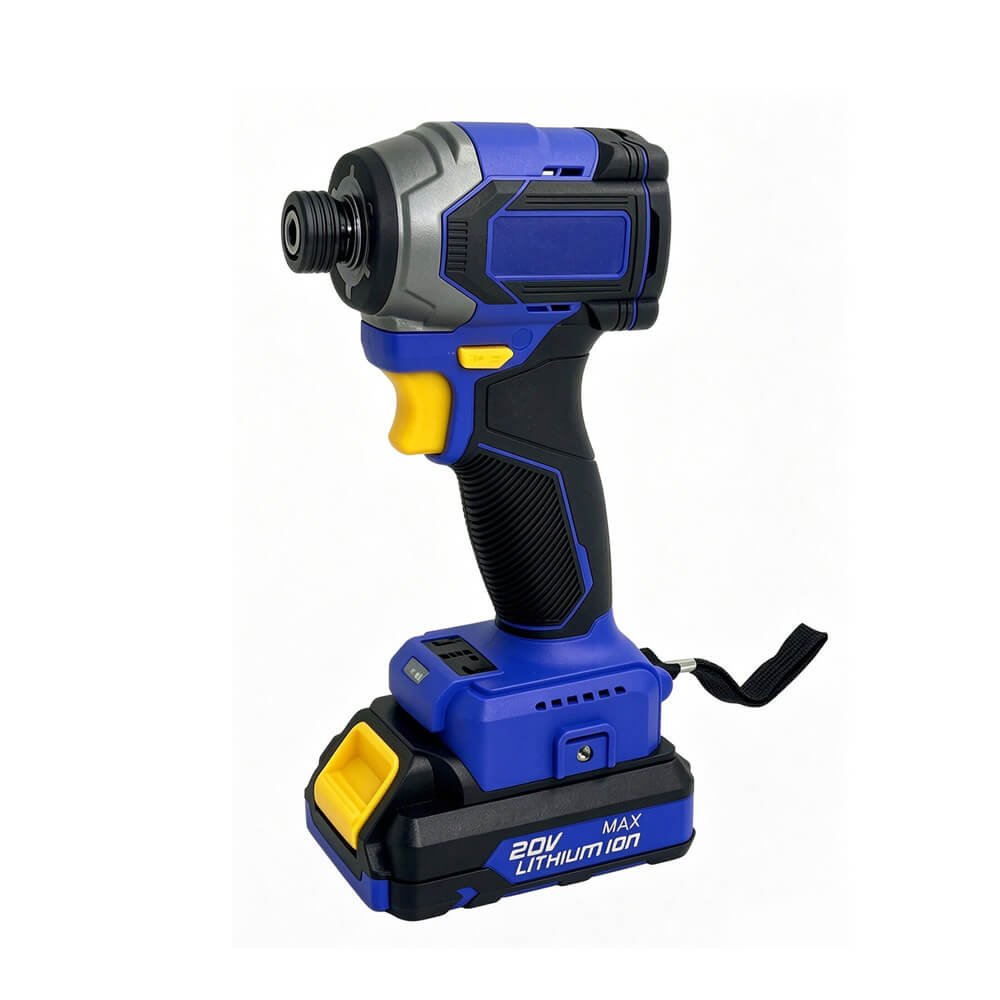
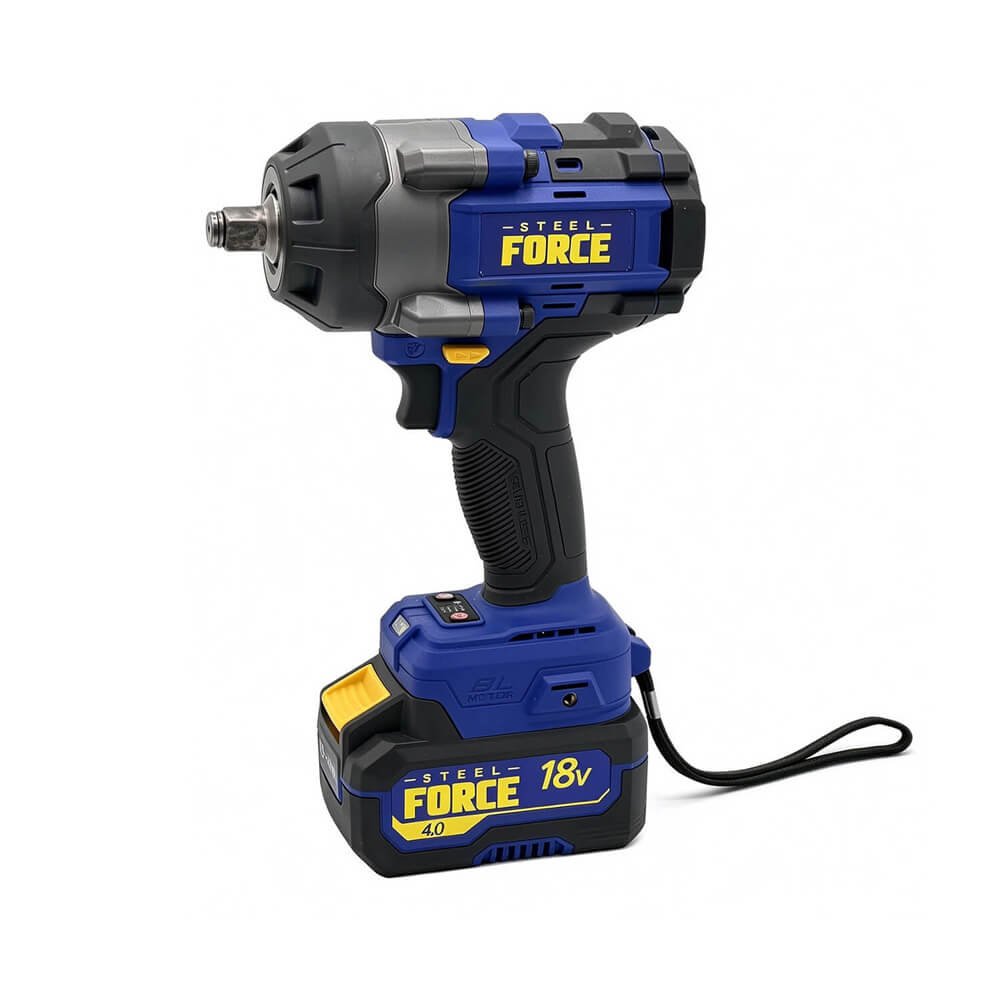

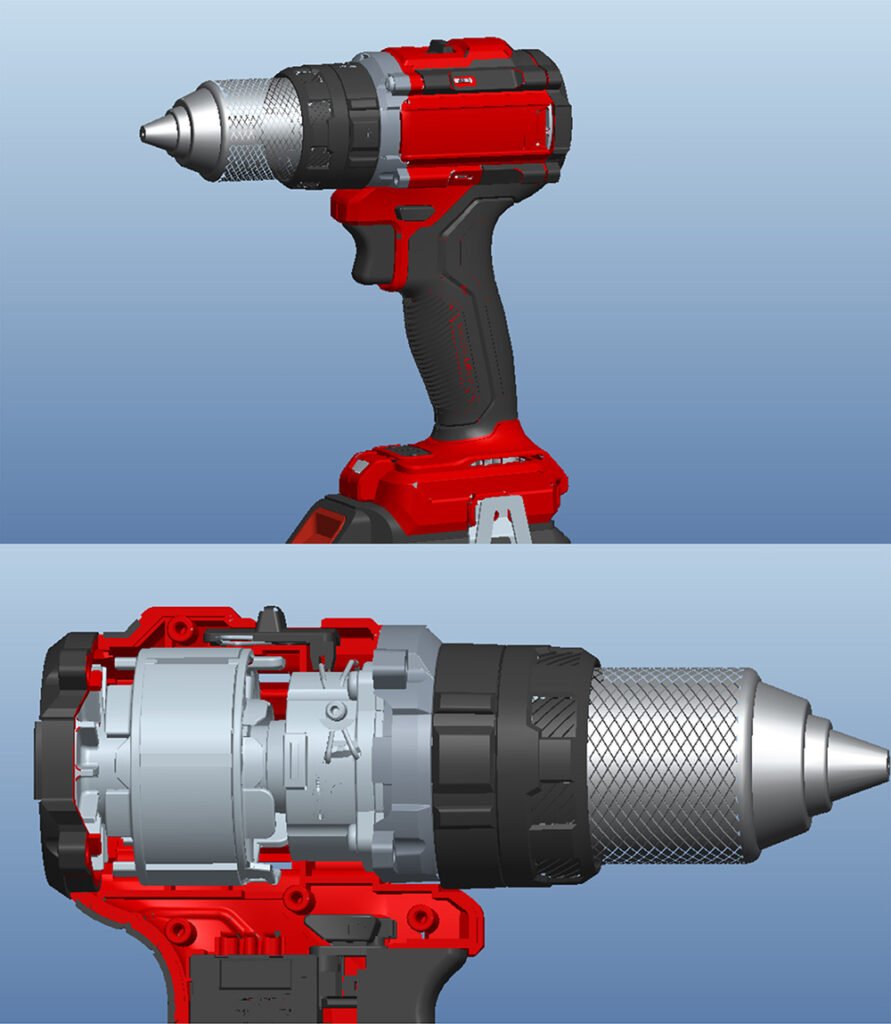
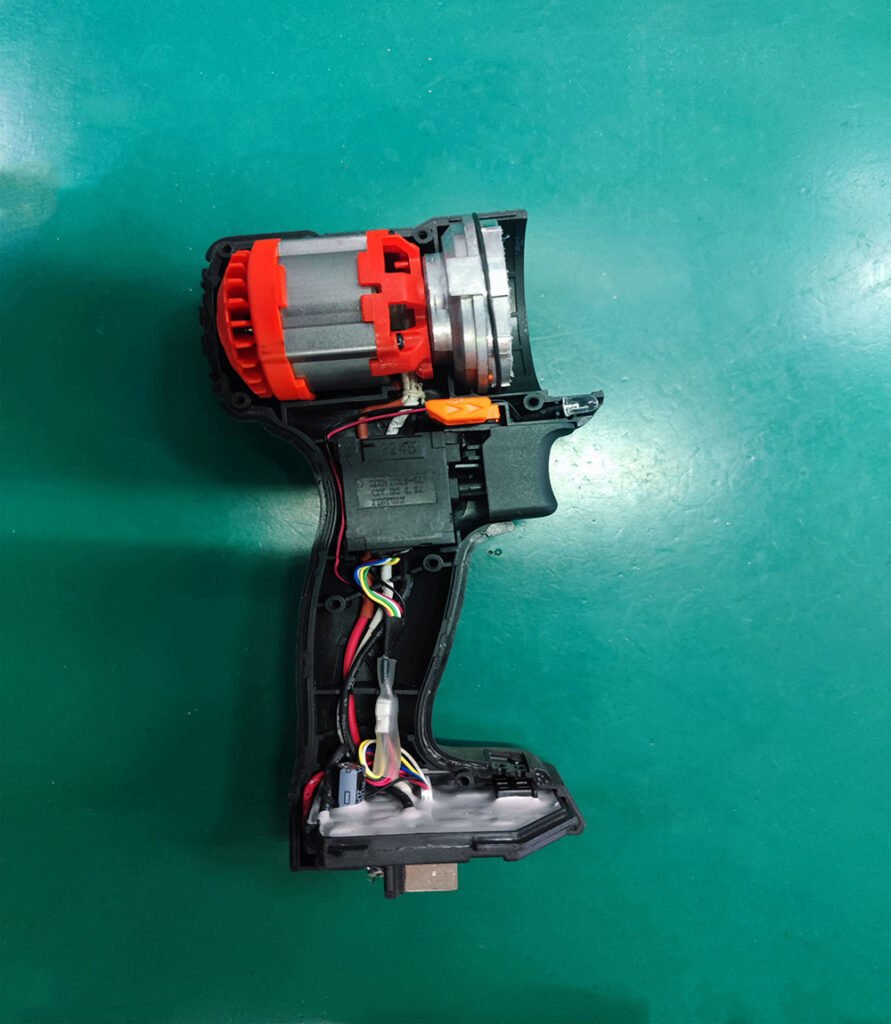
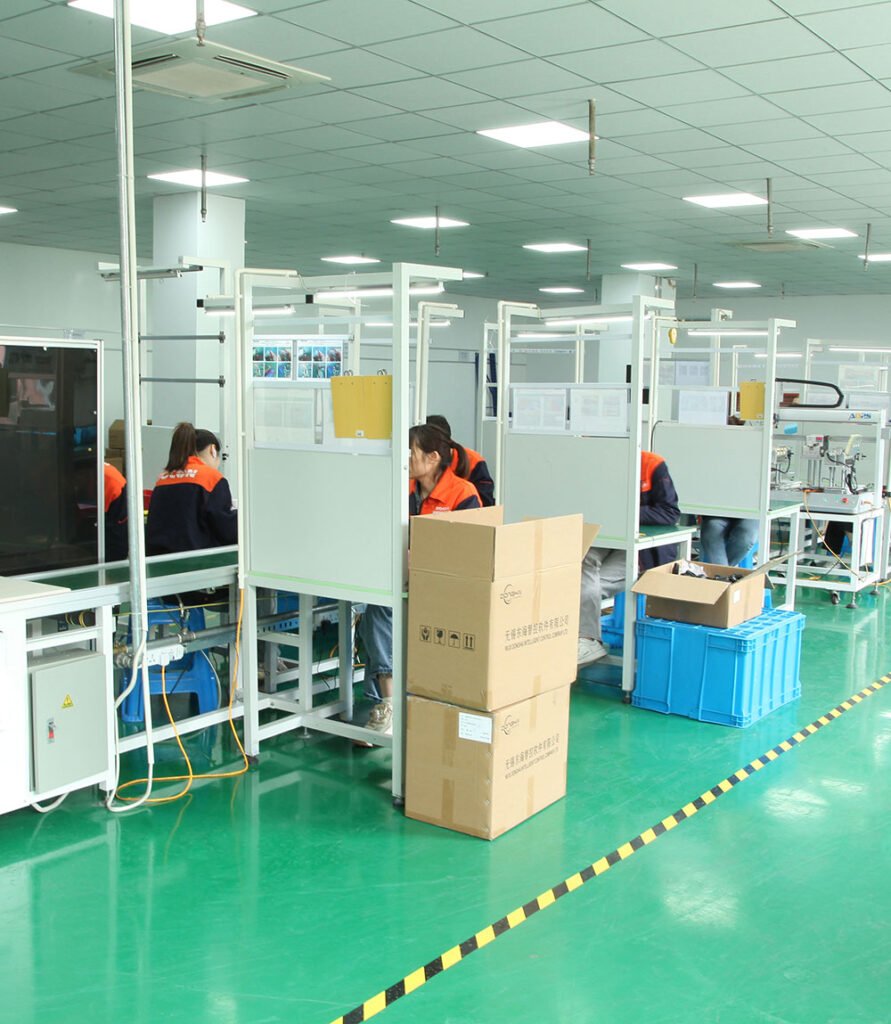
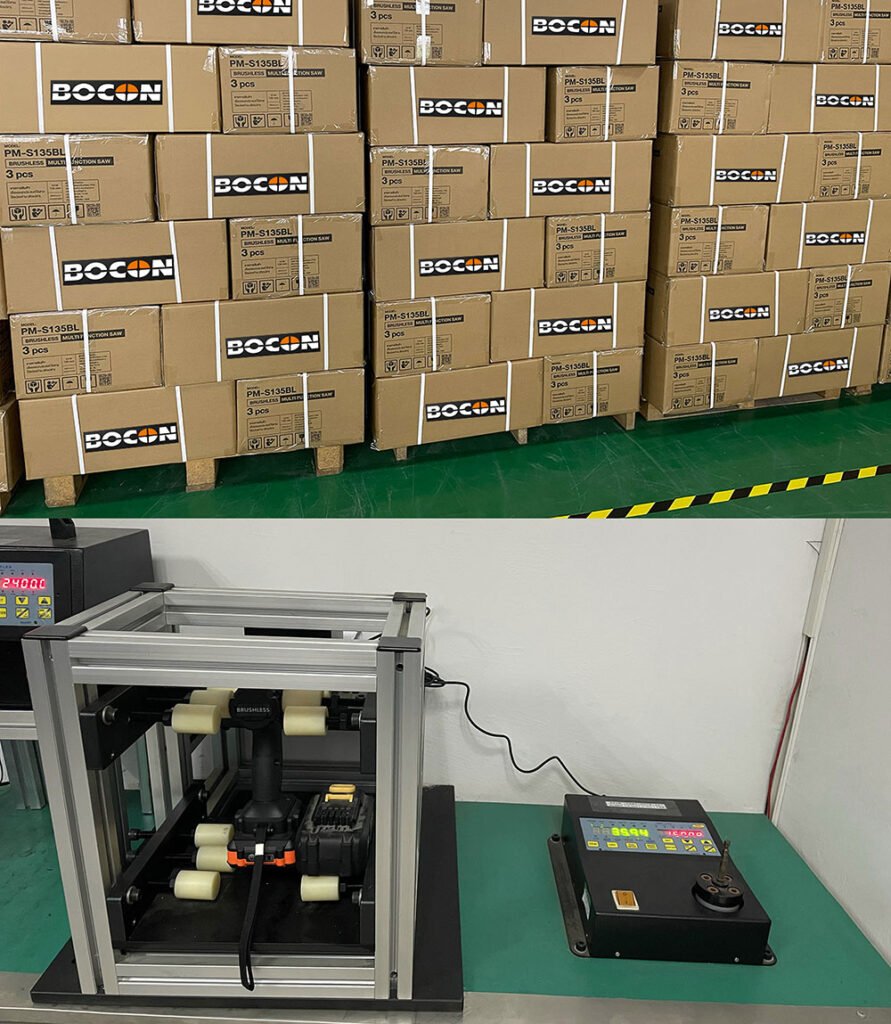
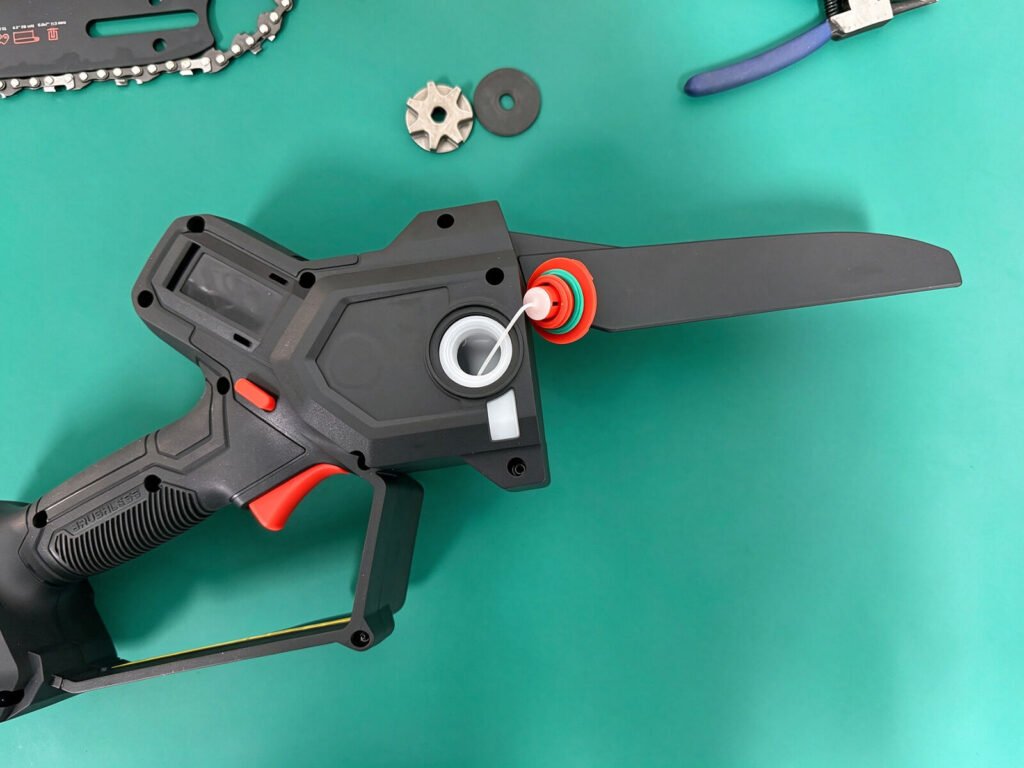

Bocon is a cordless power tool OEM factory in Wuxi, China, near Shanghai. We build OEM, ODM and private label programmes on one unified 20V battery pack, compatible with the Makita battery platform, and supply a full line of brushless lithium-ion power tools. Every unit passes three functional tests before packing. Standard MOQ is 500 units per model, with an annual output of 500,000 units.
We build semi-professional and professional cordless power tools for brands — decades of models already shipping across 13 categories, from drills, impact drivers and rotary hammers to saws, grinders and work lights — and we develop new tools to your own specification on one unified 20V battery pack. Everything below can be supplied as OEM, ODM or private label under your own brand.
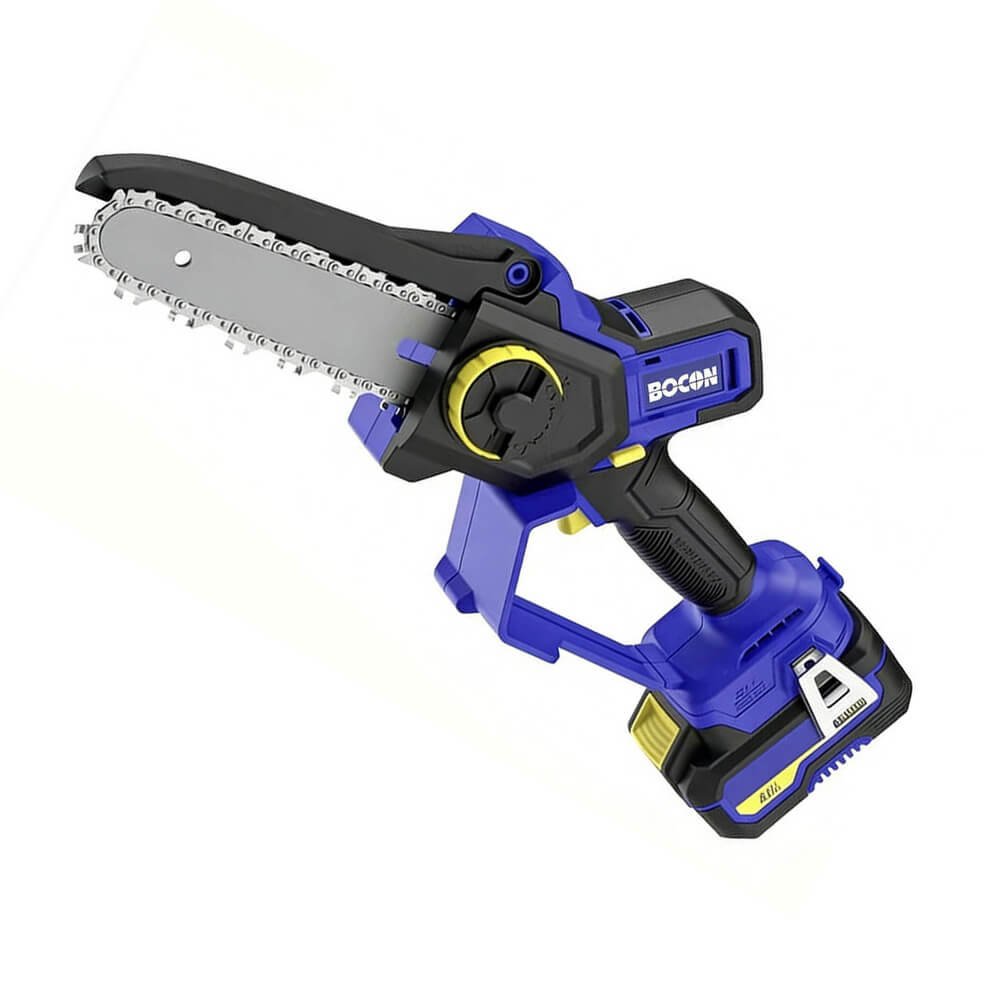
Guide bar length: 6 inch
Chain speed (no load): 8 m/s
Max. cutting diameter: 160 mm
Motor: Brushless
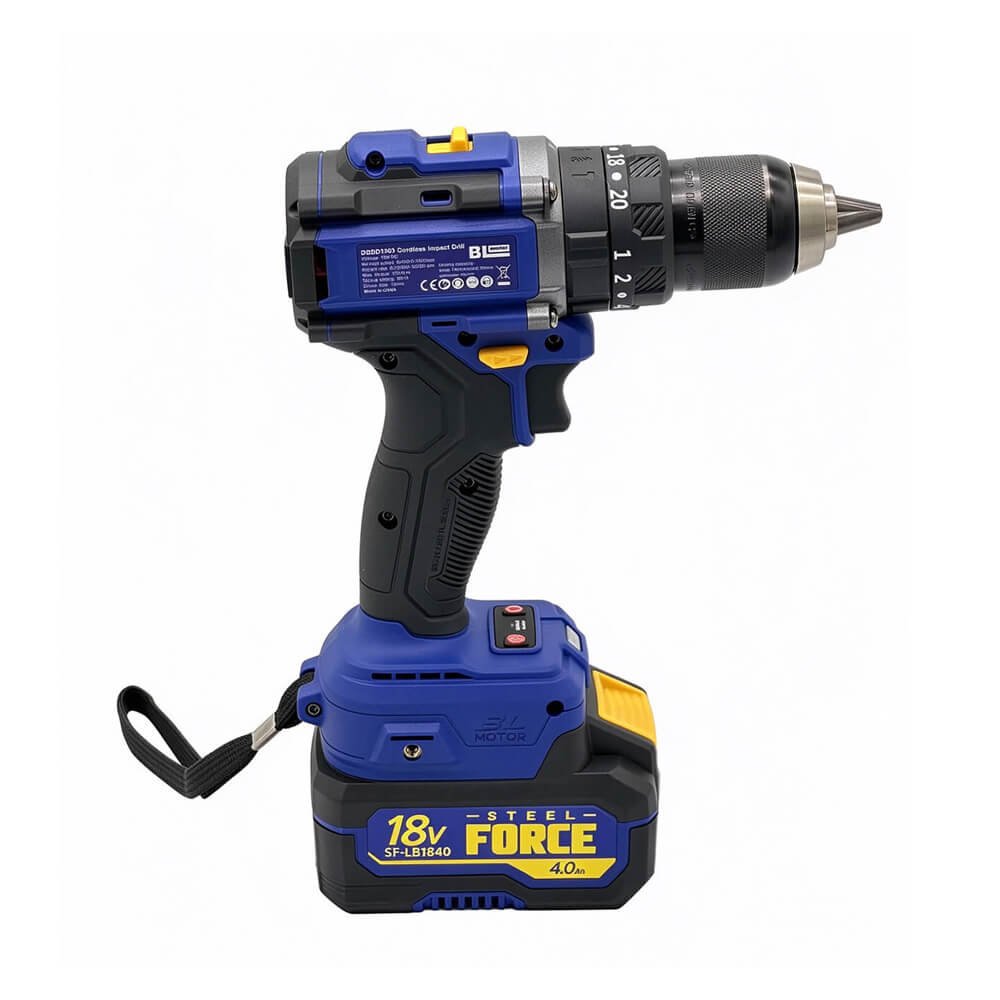
Three functions (with impact function)
13 mm chuck
Max. torque: 100 N·m
Motor: Brushless
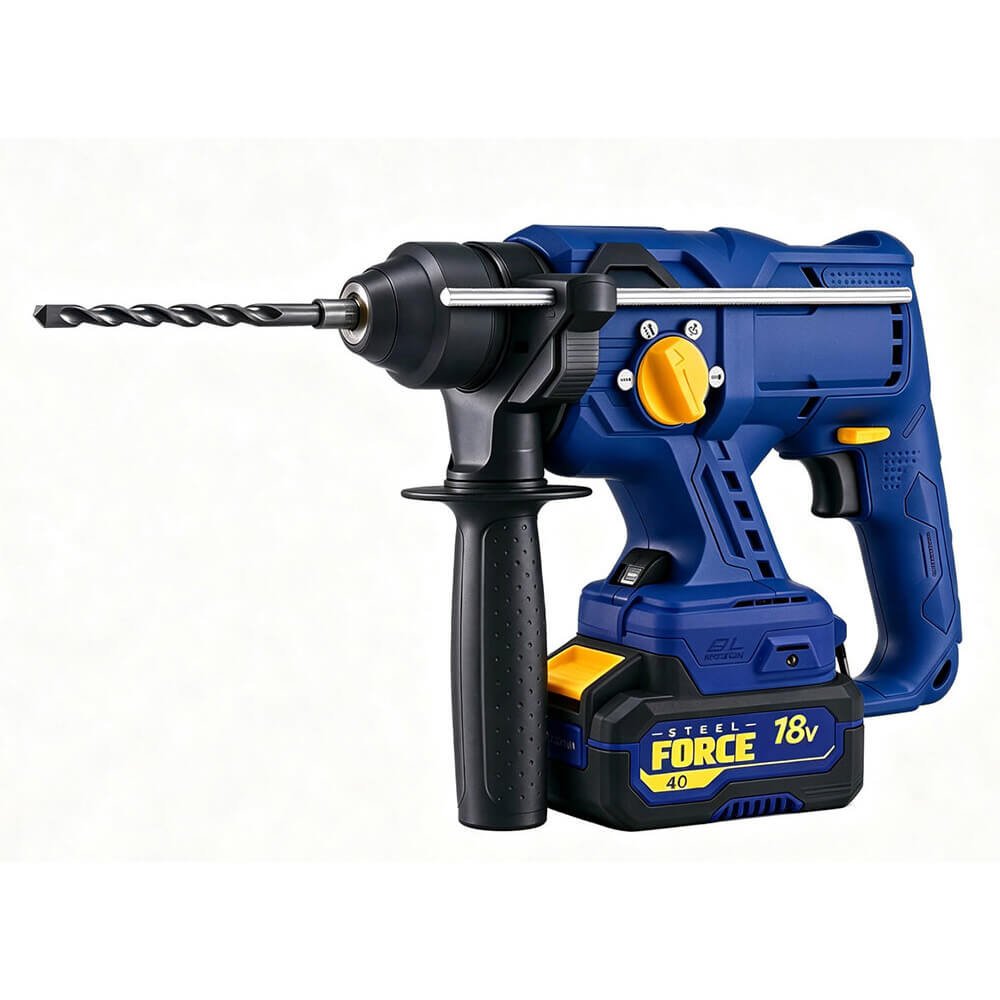
Four-mode switch
Max. single-impact energy: 1.7 J
No-load speed: 0–1400 r/min
Chuck type: SDS-Plus
4-speed adjustment (impact mechanism)
Auto-stop reverse (easy on the hands)
Max. torque: 230 N·m
1/4″ hex chuck
Max. torque: 1,000 N·m
4-speed + auto-stop reverse
1/2 in output shaft (3/4 in optional)
Built-in LED light for working in poor light
Don’t see your category? We develop new bodies on existing platforms — same motor, switch and pack engineering, shorter tooling cycle.
Six steps from first enquiry to delivery. You keep the brand, the packaging and the customer relationship — we handle tooling, production and testing.
Tell us the tool, the platform and the market. Our team responds with a tailored proposal covering specification, tooling and indicative pricing.
Send your CAD files or simply describe the look you want. You can also start from our existing 20-tool range and adapt housing, colour and branding.
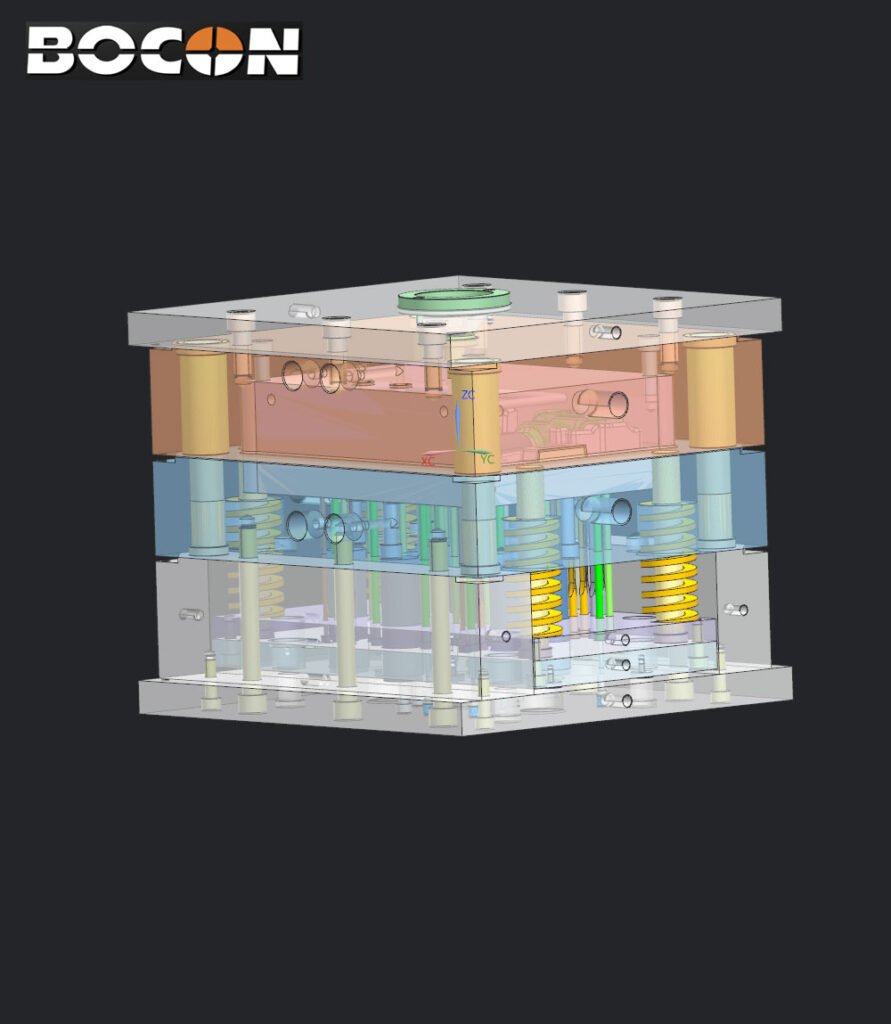
Once the exterior is approved, we build the mould to the agreed tolerance and finish. Tooling quality at this stage decides the life of the product.
You receive a physical prototype for inspection and field testing, so every detail is confirmed before mass production starts.
Production runs on our 500,000-unit annual output, with incoming inspection and in-process checks at each assembly stage.
Every finished tool is tested, packed to your artwork and prepared for export, with batch test records available on request.
Every cordless tool we ship passes three functional tests before packing — not on a sample basis, but on every single unit. Components are inspected on arrival, then each assembled tool is checked for current and voltage, torque output and no-load speed.
Catches winding faults, short circuits and abnormal resistance before the tool leaves the line.
Output torque is verified on a torque tester against the specification for that model.
Measured with a tachometer and compared with the rated r/min for the model and gear setting.
Most OEM factories assemble to a drawing. We also question the drawing. These four decisions change how the tool behaves in the hand — not just on the spec sheet.
Our cordless chainsaw carries an oil tank. Once filled, oil is fed to the chain while the tool runs, keeping the bar and chain lubricated and preventing the overheating and smoking that shortens chain life.
Some semi-automatic designs rely on a primer bulb: the operator stops and pumps oil onto the chain at intervals, and if they forget, the chain runs dry. Some lower-cost models have no oil tank at all. Both shift a maintenance task onto the user — and both shorten bar and chain life in continuous cutting.
Oil tank + automatic pump. No manual priming during the cut.
Operator must stop and pump oil at intervals.
Chain runs dry; wear starts early.
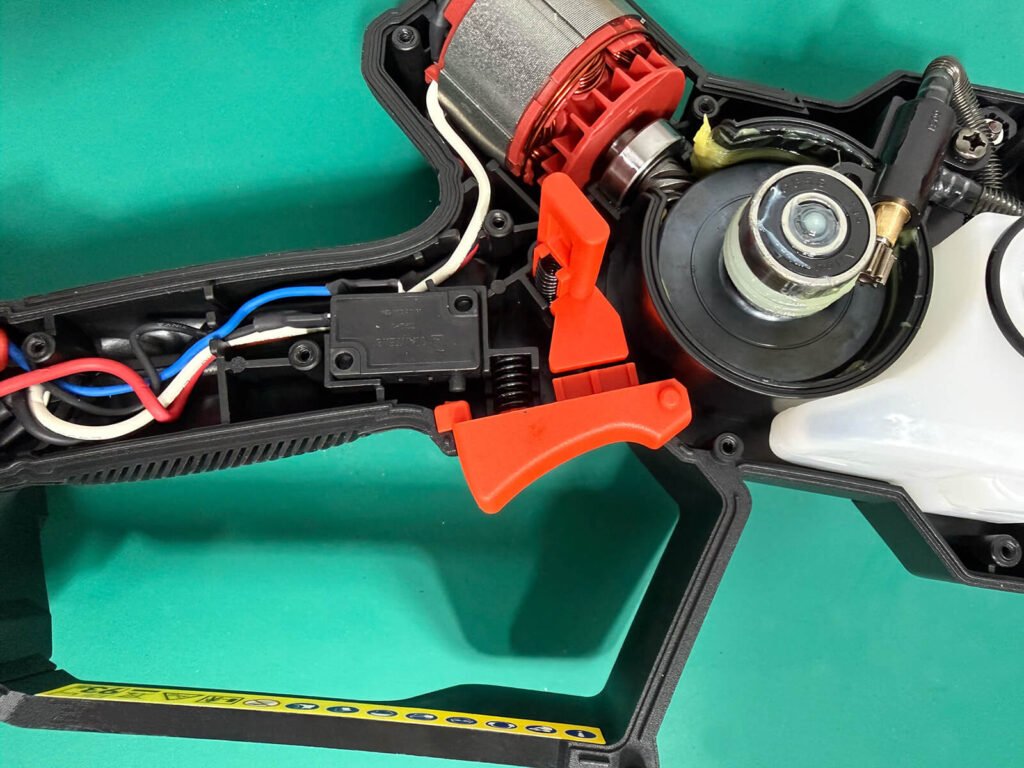
Our switch assemblies use three independent sections rather than a single integrated block. Separating the functions lets each part be toleranced and sprung for its own job, which reduces the force needed at the trigger and gives a cleaner, more progressive feel through the stroke.
On long production runs this also matters for serviceability: a worn section can be replaced without scrapping the whole assembly.
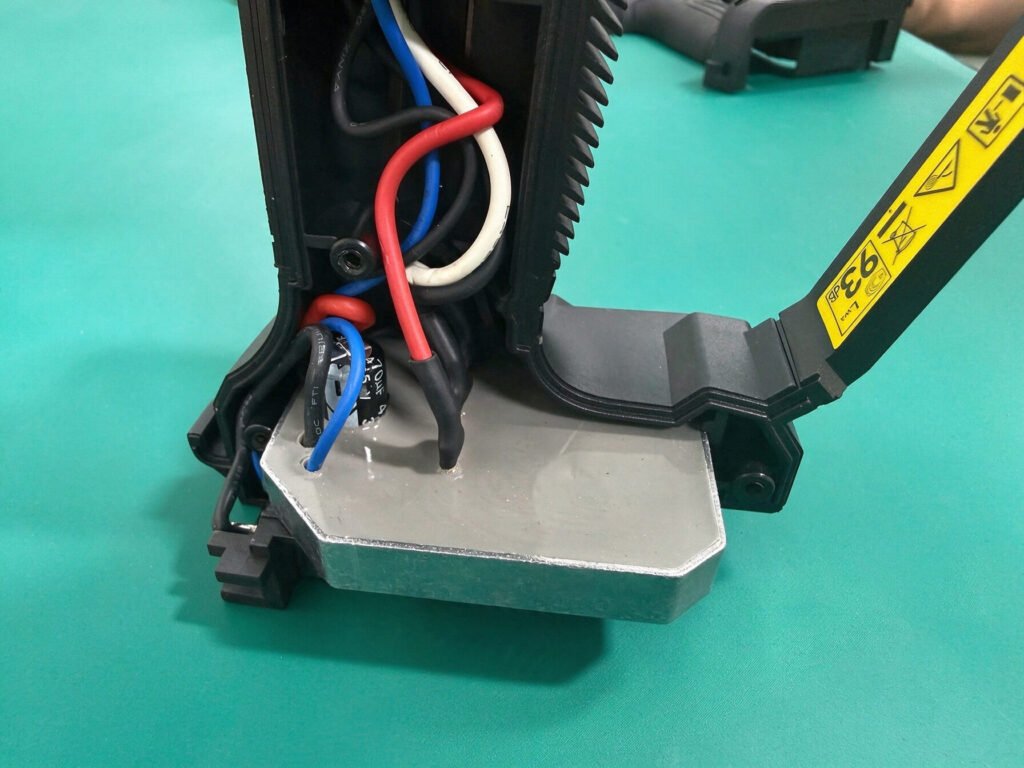
The controller board sits behind an aluminium plate, not a plastic one. Three consequences matter in daily use:
Aluminium spreads and dissipates MOSFET heat far better than plastic.
The plate shields the board from impact and vibration inside the housing.
Shielding against EMI (interference leaving the tool) and EMS (interference reaching the controller).
When a component changes — a switch, a motor, a gear, a battery contact — we do not only test the component in isolation. The changed part goes back into a complete tool and the assembly is re-run through durability testing, including at least 60 battery pack charge-discharge cycles.
A part that passes on the bench can still fail in a tool. This step is how we catch that before your order ships.
Durability is validated in the assembled tool, under load, not just on the component.
Two factories can quote the same tool and be 30% apart — the difference is often the mould, not the labour.
If your programme is a few thousand units for a seasonal line, the lower tier can be the right commercial choice, and we will say so. If you are building a range you intend to sell for several years, the higher tier usually costs less per unit once amortised — and protects your brand from mid-run quality drift that shows up later as warranty claims.
The battery is where most cordless programmes succeed or fail in the field. We build packs around 18650 cells from established Chinese cell makers, with a full-protection BMS and a cycle life we test rather than estimate.
Every pack carries a temperature-controlled protection board covering the five failure modes that matter. The board sits on the pack, not on the tool, so protection travels with the battery across every tool on the platform.
Compared with a basic protection board, the difference is visible in the layout: more protection circuitry, better heat spreading and a larger thermal path away from the cells.
Cycle life depends on depth of discharge, charge rate and temperature, so we quote the test condition alongside the number rather than a single headline figure.
Direct answers on MOQ, certification, lead time, testing and tooling.
We are a professional manufacturer of high-end lithium-ion power tools. Our factory is located in Wuxi City, Jiangsu Province, China (near Shanghai), which is a major hub for power tool manufacturing.
Yes. With a founding team led by an engineer with 15 years of R&D experience, we provide full-spectrum customisation — from product design and mould development to branding and packaging.
Using an existing power tool design with your colour scheme, the MOQ is typically 500 units per model. For a new mould, contact us at shawn@oemcordlesstools.com and we will quote against your volume.
Our cordless power tools are certified for export with CE (MD + LVD + EMC + RoHS), ETL and UN 38.3. Our factory is also ISO 9001 certified, with products tested to IEC 60335 and RoHS (IEC 62321) standards.
Usually within 45 days. Our annual output is 500,000 units, which keeps lead times stable, and we keep 3–5 verified backup suppliers for every key component to prevent delays.
Every unit. After assembly, each tool is checked for current and voltage, torque output and no-load speed before packing. Components are also inspected on arrival, before they enter the warehouse.
We use 18650 cells from EVE and MINGYA, paired with an intelligent BMS and a dedicated temperature control board. The system cuts power in case of over-charge, over-discharge, over-current, over-temperature or short circuit.
In our testing, packs reach 1,000–1,800 charge-discharge cycles. Published figures for professional cordless tools commonly sit around 800–1,000 cycles. Cycle life depends on depth of discharge, charge rate and temperature, so the test condition is quoted with the number.
We use high-strength alloy steel for spindles and precision metal planetary gears that undergo heat and carbonisation treatments. This ensures our mechanical components outlast standard market alternatives by over 20%.
Our brushless expertise delivers higher power output, higher torque, lower heat rise and longer continuous runtime compared with brushed or entry-level brushless motors. Nine of our twenty tools are brushless.
Tooling built for DIY and household programmes typically costs RMB 30,000–50,000 and is good for roughly 8,000 units. Our professional-grade tooling costs RMB 150,000–250,000 and produces 300,000–500,000 units, with consistent wall thickness and tolerances across the whole run. We quote both tiers and tell you where the break-even sits.
Yes. A changed part is re-fitted into a complete tool and the assembly is run through durability testing, including at least 60 battery pack charge-discharge cycles — a part that passes on the bench can still fail in a tool.
We hold a track record of zero complaints regarding major quality failures. By focusing on a low Total Cost of Ownership (TCO), we minimise defect rates so partners rarely need to trigger after-sales claims, saving labour costs in overseas markets.
Yes. We regularly pass supplier audits from international power tool brands, covering Quality & Technical, Social & Ethical (CSR) and Environmental & Safety standards. Visitors are welcome by appointment.
Yes. For every OEM/ODM project we provide a complete technical package: exploded views, spare parts lists, circuit diagrams and maintenance manuals to support your local service centres.
We maintain a diversified supply chain for all critical components — batteries, motors and gears — with 3–5 verified suppliers for each part, so production continues through global market fluctuations.
Yes. Our range covers 24 models in 14 categories, but tooling is not limited to that list. A new body can be developed on an existing platform — the same motor, switch, controller and battery pack — which shortens both the tooling cycle and the certification work. Send the tool type, the target market and your volume, and we will quote development cost and lead time before you commit.