
I’ve been on the factory side of this equation for a long time. Fifteen years of handling export inquiries, walking buyers through our production lines, sitting across from sourcing managers who’ve been burned before, and watching good partnerships get built — and bad ones collapse.
So when I write about how to find a reliable power tools ODM manufacturer in China, I’m not writing from a buyer’s handbook. I’m writing from the inside.
Most guides will tell you to search Alibaba, attend the Canton Fair, request certifications, and check reviews. That’s fine as far as it goes. But none of it tells you what actually separates a factory worth working with from one that will cost you a product recall, a missed peak season, or two years of rebuilding your brand’s reputation.
This guide does. Let’s get into it.
First, Understand What “ODM” Really Means at a Power Tool Factory
The term ODM gets used loosely, and that vagueness causes real problems for buyers.
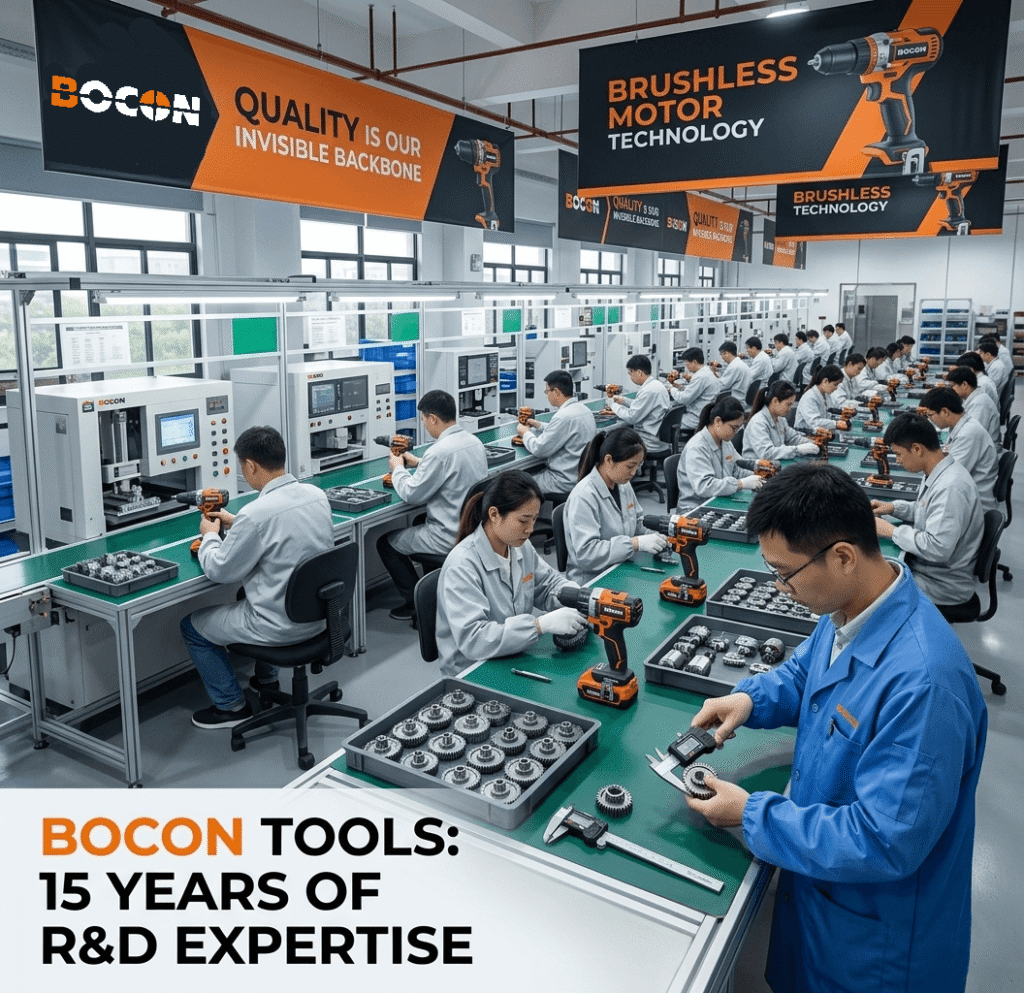
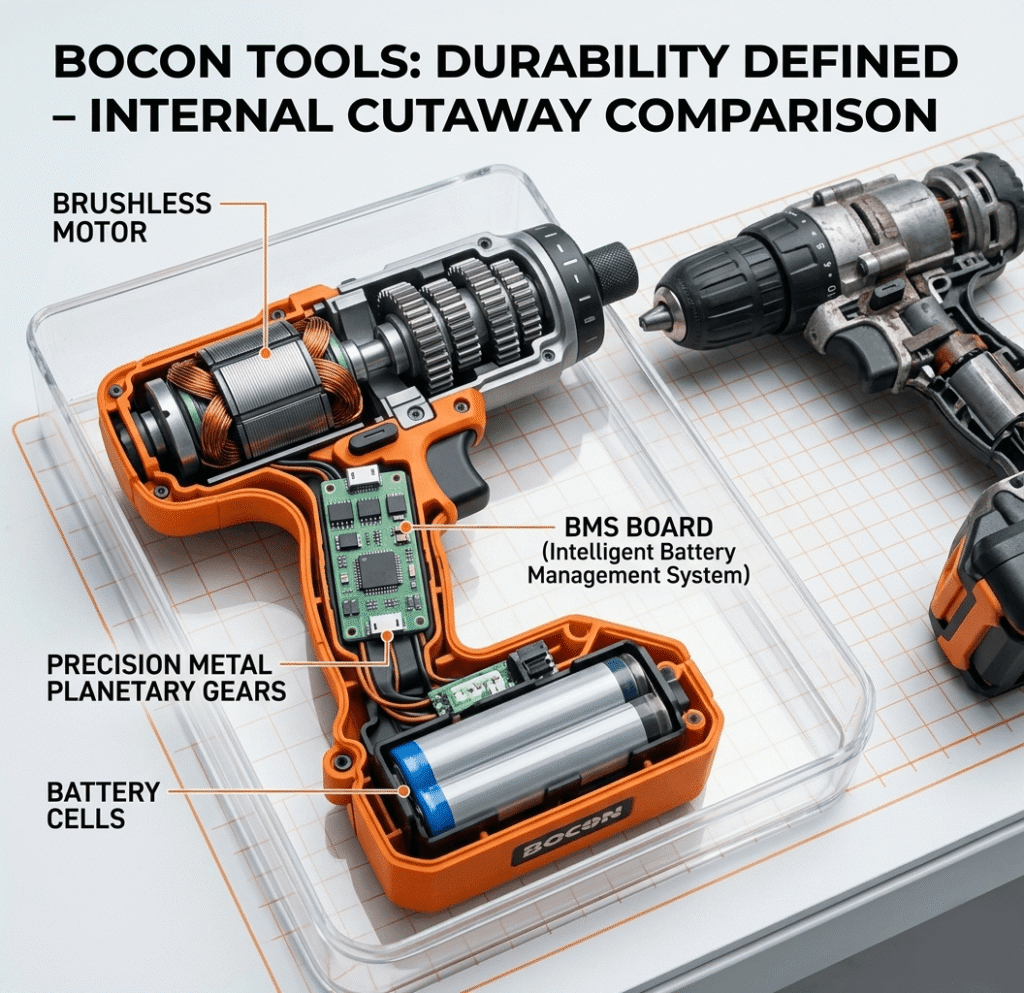
In a strict sense, ODM (Original Design Manufacturer) means the factory owns the product design and you license it — typically with some level of customization. But in the power tool industry, “ODM capability” spans an enormous range. At one end, you have factories that reverse-engineered a competitor’s product, made the housing a slightly different shape, and are now calling it their “proprietary design.” At the other end, you have factories with genuine engineering depth — in-house R&D teams, brushless motor tuning expertise, proprietary BMS (Battery Management System) algorithms, and years of testing across professional and industrial use cases.
The difference in end-product quality between those two extremes is not marginal. It’s the difference between a tool that survives three years on a construction site and one that comes back in warranty claims six months after launch.
When you’re evaluating a Chinese ODM factory, the first question is not “do they do ODM?” — almost all of them claim to. The real question is: how deep does the engineering actually go?
Why Most Buyers Start the Search in the Wrong Place
The default instinct is to go to Alibaba or Made-in-China, search “cordless drill manufacturer ODM,” and start comparing quotations. I understand why — it’s fast, it gives you options, and the price comparison is easy.
But here’s what you don’t see from a platform listing: whether the factory actually manufactures the product or is a trading company fronting for multiple factories. Whether the certification documents they show you are valid for the specific product you’re buying. Whether the sample they’ll send you matches what actually comes off the production line at volume. Whether the engineering team they’re describing is one full-time engineer who started last year or a team that’s been iterating on brushless motor design since 2009.
Platforms are a starting point for discovery. They’re not a substitute for due diligence. The factories with the most polished Alibaba pages are not necessarily the best factories — they’re the factories that invested most heavily in their Alibaba presence.
The 6 Questions That Actually Reveal a Factory’s ODM Capability
After years of watching how buyers evaluate factories — including the ones we compete with — I’ve identified the questions that quickly separate serious manufacturers from the rest.
1. Who designs your products, and what’s their background?
This is the single most revealing question you can ask. A factory with genuine ODM capability should be able to tell you who runs their R&D, what their engineering background is, and how long they’ve been developing in this specific product category.
Brushless lithium-ion power tools are not simple products. The motor control algorithms, the BMS protection logic, the thermal management — these require real electronics and mechanical engineering expertise. If a factory’s “R&D team” is actually a product manager who sources designs from external freelancers, that’s not ODM capability. That’s assembly with a branded overlay.
2. Can you show me your internal testing protocols — not just your certificates?
Certificates tell you a factory has met a minimum threshold at a specific point in time. Internal testing protocols tell you how they maintain quality across every production run.
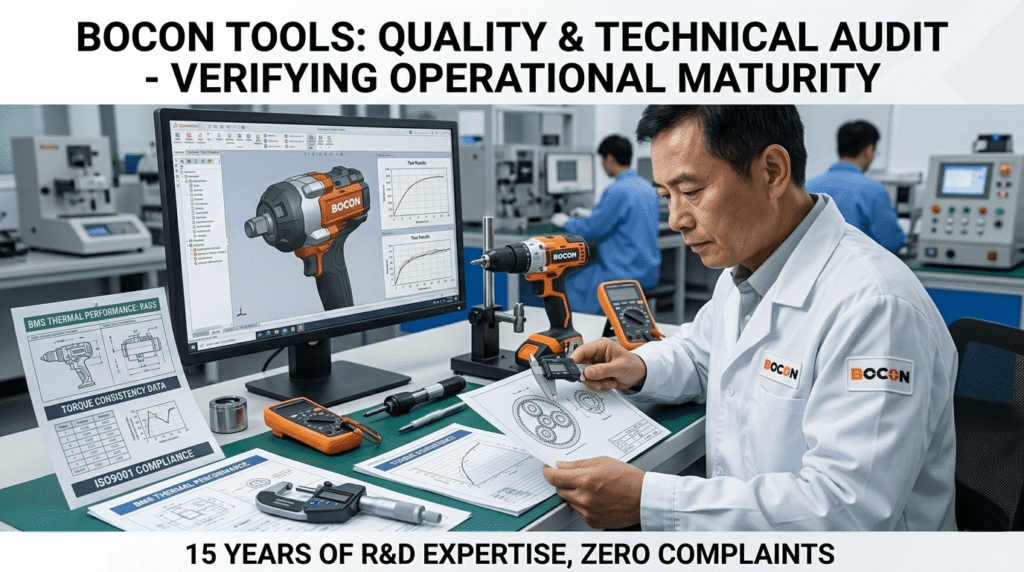
Ask to see their incoming component inspection criteria. Ask what their rejection rate is for battery cells, motor windings, and gear sets. Ask how they test torque output and thermal performance on finished units before shipment. A factory that can answer these questions in detail has quality systems that actually function. A factory that responds by showing you their ISO 9001 certificate isn’t answering your question.
3. How many qualified suppliers do you maintain for critical components?
This question matters more than most buyers realize, for two reasons.
First, it tells you about supply chain resilience. A factory with a single source for its battery cells or motor cores is vulnerable — one supplier disruption becomes your delivery delay. Factories that operate at a professional level maintain multiple qualified suppliers for every critical component category, and they do this deliberately.
Second, it tells you about quality consistency. Factories that maintain multiple qualified suppliers have already done the engineering work to define what “qualified” means for each component. That definition — the tolerance specifications, the performance criteria, the failure mode analysis — is the invisible backbone of a consistent product.
4. What are the hardest products you’ve shipped, and what went wrong the first time?
This is the question that tends to surprise people. But it’s one of the best indicators of a factory’s operational maturity.
Every manufacturer has had a challenging project — a brushless motor that ran too hot under continuous load, a gear train that developed backlash earlier than spec, a BMS that triggered false over-current shutdowns in cold weather. How a factory talks about those problems — whether they can identify root causes, describe what they changed, and explain how they validated the fix — tells you far more than any marketing material.
Factories that claim to have never had a problem are either lying or haven’t done enough volume to encounter their product’s failure modes. Neither is reassuring.
5. What certifications do you hold, and which products are they specific to?
This is where a lot of buyers get tripped up. A factory can hold a valid CE certification for one product and not for another. ETL listing for the US market is product-specific. UN 38.3 testing for lithium battery transport needs to be done on the specific battery configuration you’re importing.
When you see a factory’s certification page, the right follow-up is always: “Can you show me the actual test report for the specific product I’m buying, including the specific battery pack?” If the answer is vague, the certification coverage may be narrower than represented.
For brands selling into North American and European markets, the certifications you should be verifying are: CE (covering the Machinery Directive, Low Voltage Directive, and EMC Directive), ETL or UL for North American market access, UN 38.3 for lithium battery transport, and RoHS for materials compliance. These are non-negotiable, and the liability for gaps flows to the importer.
6. What’s your monthly production capacity, and how do you handle a 3x surge in orders?
Most factories will tell you their theoretical maximum capacity. What matters is their operational capacity — the volume they can sustain without compromising quality — and what their contingency plan looks like if your order doubles.
The honest answer involves things like: how many production lines they have, how they schedule overtime without reducing QC oversight, what their component buffer inventory policy is, and whether they have experience managing rapid volume increases with existing clients.
Red Flags I’ve Seen Cost Buyers Dearly
In fifteen years, I’ve seen buyers walk into deals that looked fine on paper and turned into operational disasters. The warning signs are usually visible beforehand.
A product catalog that covers too many categories. A factory that claims to manufacture cordless drills, angle grinders, pressure washers, air compressors, and garden equipment at the same facility is either a trading company, or is compromising engineering depth in most categories to cover breadth. Serious ODM capability in power tools is category-specific.
Certifications they can’t trace to specific test reports. If a factory shows you a CE certificate but can’t produce the technical file or the specific notified body test reports, the certification’s validity is questionable. This is especially common with LVD (Low Voltage Directive) and EMC compliance.
Samples that arrive unusually fast or unusually polished. I know this sounds counterintuitive, but a sample that arrives in five days with perfect finishing sometimes isn’t built from the actual production tooling — it’s a hand-assembled demonstration unit. Ask specifically whether the sample was built using production tooling and production components. The answer matters for what you can extrapolate to mass production quality.
Evasiveness around defect rates and warranty claim history. Good factories track these numbers. They know their DPPM (defective parts per million) for key failure modes. If a factory can’t tell you anything about their historical warranty claim rates with existing clients, that’s not because the number doesn’t exist — it’s because they don’t want to tell you.
What the Sourcing Platforms Won’t Tell You About Chinese Power Tool Manufacturing
The regional concentration of Chinese power tool manufacturing is real and consequential. The Yangtze River Delta — Jiangsu and Zhejiang provinces — has the densest concentration of mid-to-high-end brushless tool manufacturers. The Pearl River Delta (Guangdong, primarily around Dongguan and Shenzhen) tends toward higher production volume but with more variation in technical depth.
This isn’t a hard rule, but it reflects a real difference in industrial history. Jiangsu’s manufacturing base developed in closer relationship with Japan’s industrial precision culture — Panasonic, for instance, has had deep manufacturing relationships with Jiangsu-based factories. That influence shaped the technical culture of the region’s tool manufacturers in ways that are still visible today in quality system maturity and engineering depth.
When you’re evaluating a factory, understanding where they’re located — and what that region’s manufacturing ecosystem looks like — is part of the context.
The Audit Process That Professional Brands Use (And That You Should Too)
Mid-to-high-end brands that operate in professional and industrial tool markets don’t just request certificates and place orders. They run formal supplier audits, typically covering three dimensions:
Quality and Technical Audit: Production process documentation, incoming inspection criteria, in-process QC checkpoints, finished goods testing, calibration records for test equipment.
Social and Ethical Audit: Labor practices, working hours, wage compliance, health and safety protocols. This matters for brands selling into European and North American markets, where supply chain transparency is increasingly a regulatory and reputational requirement.
Environmental and Specific Safety Audit: Materials compliance (RoHS, REACH), waste management practices, chemical handling protocols.
If the factory you’re evaluating has never been through a formal supplier audit by a professional brand, that tells you something about the tier of business they’ve been doing. If they pass regular audits from demanding clients — the kind of clients who require both quality system certifications and social responsibility compliance — they’ve been stress-tested in ways that their marketing materials can’t replicate.
Ask directly: “Which clients have audited your facility in the last two years, and can you share any audit summary results?” The response will tell you a lot.
A Realistic Timeline for Finding and Qualifying an ODM Partner
One of the most common mistakes I see buyers make is underestimating how long proper supplier qualification takes — and then making shortcuts because of deadline pressure.
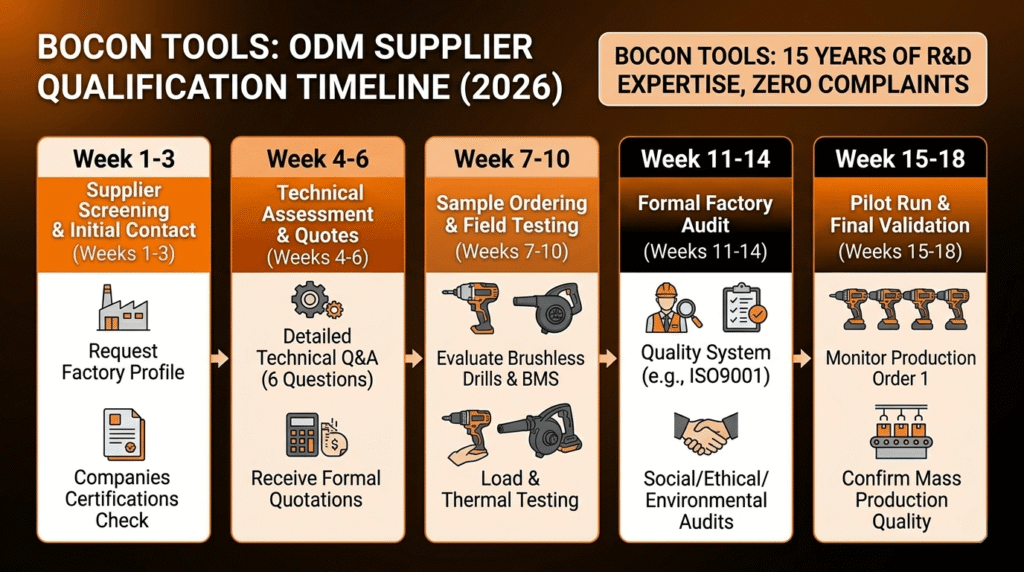
Weeks 1-3: Initial supplier identification and screening. Request company profiles, factory photos, certification documentation. Make a shortlist of 4-6 candidates.
Weeks 3-6: First round of technical questions and capability assessment. Use the six questions outlined above. Request formal quotations for the specific product configuration you’re targeting. Make a shortlist of 2-3 candidates.
Weeks 6-10: Sample ordering and testing. Order samples from your shortlisted factories. Test them seriously — not just ergonomics and appearance, but load performance, thermal behavior under sustained use, battery runtime against spec, and any market-specific compliance testing you need.
Weeks 10-14: Factory visit or third-party audit. At this stage, if you’re planning a meaningful volume, there’s no substitute for either visiting the factory or engaging a qualified third-party inspection service to audit it on your behalf.
Weeks 14-18: First production order negotiation and pilot run. Start with a smaller-than-ideal order quantity. Use the pilot run to validate that production quality matches sample quality.
That’s four to five months of proper qualification, from start to first shipment. Buyers who try to compress this timeline are the ones who end up with quality surprises at scale.
Matching Your Product Ambition to the Right Manufacturing Tier
Not every brand needs a factory with 15-year R&D heritage and ISO 9001 quality systems supporting industrial-grade supplier audits. But understanding which tier you actually need helps you avoid two common mistakes: overpaying for capabilities you won’t use, or under-sourcing and discovering the gap when you’re already in market.
Entry-level private label: You’re launching a house brand, volume is modest, and the product category is well-established (corded tools, basic cordless). You need a factory with clean certification documentation and reasonable quality consistency. You don’t need deep engineering partnership.
Mid-market branded tools: You’re building a brand that needs to stand for something beyond price. The product needs to perform reliably, hold up to professional use, and have a warranty claim rate that doesn’t eat your margins. Here, engineering depth matters — you need a factory that understands why their products perform the way they do and can improve them over time.
Professional/industrial tools: You’re competing with established professional brands. The product will be tested by professionals who have used DeWalt, Milwaukee, Makita, and Hilti. Every component choice, every tolerance decision, every BMS protection setting matters. At this tier, you need a manufacturing partner whose technical depth is genuinely at that level — whose founding team came from power tool engineering, not assembly operations.
Be honest about which tier you’re in. The right factory for your business is the one that matches your actual requirements, not the one with the most impressive certificate wall.
Conclusion: The Factory You Want Is the One That Earns Your Trust Slowly
The reliable ODM power tool manufacturers in China aren’t the ones with the most aggressive sales follow-up or the most polished trade show booths. They’re the ones that welcome hard questions, share real numbers, invite you to audit their quality systems, and talk openly about the challenges they’ve solved.
Finding a reliable power tools ODM manufacturer in China in 2026 takes time, structured evaluation, and a willingness to go deeper than platform listings and certificate pages. The buyers who do it right end up with manufacturing partners they keep for a decade. The ones who shortcut it keep starting over.
If you’re serious about building a power tool brand on a reliable manufacturing foundation, start with the six questions. The answers — and the quality of the thinking behind them — will tell you everything you need to know.
Want to discuss ODM partnership for brushless cordless power tools? Get in touch with our team →
Frequently Asked Questions
What’s the minimum order quantity for power tools ODM in China? MOQ varies significantly by factory and product complexity. For standard brushless cordless tools (drills, impact drivers), most factories that offer true ODM programs work with initial orders in the 500–2,000 unit range per SKU, depending on the degree of customization. If you need custom tooling (new housing geometry), MOQ requirements and upfront tooling costs will be higher.
How do I verify that a Chinese power tool factory’s CE certification is valid? Ask for the specific Declaration of Conformity and the technical file for the exact product you’re buying, including the battery pack configuration. The DoC should reference the specific directives (Machinery Directive 2006/42/EC, Low Voltage Directive 2014/35/EU, EMC Directive 2014/30/EU) and should be traceable to specific test reports from an accredited notified body or testing laboratory.
Is it better to visit a factory in person before placing an order? For orders above a certain volume, yes — there’s no substitute. A factory visit lets you see the production environment, meet the engineering team, review the actual quality control process, and assess whether the company culture is compatible with the kind of working relationship you need. If you can’t travel to China, engaging a qualified third-party inspection service to conduct a factory audit is the next best option.
How long does it take to develop a new brushless tool from scratch with an ODM factory? A genuinely new product development — new housing tooling, motor specification, battery platform — typically takes 6–12 months from project kickoff to production-ready samples. Customization of an existing ODM platform (color, grip, minor mechanical changes) can be done in 8–12 weeks. Factor this timeline into your product roadmap before committing to launch dates.
What should I check when testing ODM power tool samples? Don’t limit your testing to how the tool feels in hand. Load test the motor under sustained use and check for temperature rise. Verify actual torque output against spec. Test battery runtime across multiple charge cycles. Check all protection functions (over-current, over-temperature, reverse polarity) actually trigger correctly. If you’re selling into a regulated market, arrange for pre-compliance testing on the sample before committing to a production order.