
There’s a question I get at least twice a week from European retail buyers, and it usually comes with a tired sigh:
“Who is actually the best OEM manufacturer for our private label cordless tools?”
Then they add: “And I don’t want a list of factories that claim they are.”
Fair enough. That list is useless anyway. Every Chinese factory that does any SEO will tell you they’re the best. The ones that aren’t? They’ll tell you the same thing.
So let me try something different. Instead of telling you who’s best, I’m going to tell you what to look for — and then give you a framework for making that decision yourself. If after reading this you want to talk to us at Bocon, that’s great. But I’d rather you make an informed choice than a brand-loyal one.
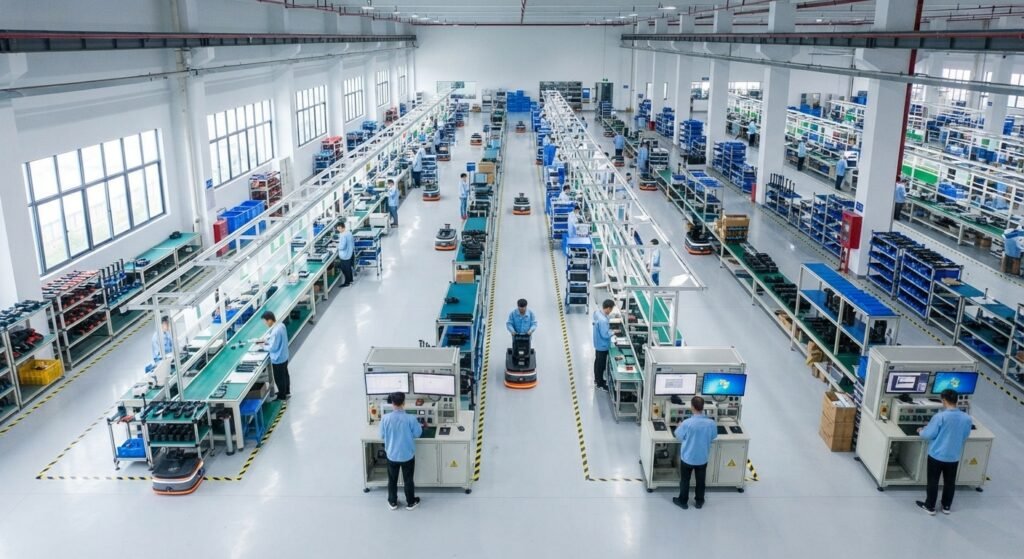
I’ve been running export business from a cordless tool factory in Wuxi for fifteen years. I’ve shipped to retailers in Germany, France, Australia, and the UK. I’ve seen good factories fail, bad factories survive on marketing budgets, and genuinely excellent factories go unnoticed because they don’t know how to talk about themselves. This is what I know.
Why the Question Is Harder Than It Looks
Most buyers asking this question are really asking two things:
- Who can I trust to deliver consistent quality at scale?
- Who won’t disappear when things get complicated?
Those are the right questions. But here’s what’s wrong with the way most buyers approach the search:
They start by comparing factory profiles and websites. They look at certifications, product catalogs, years in business, and client testimonials. That data matters — but it’s the easiest thing to fake or inflate. A factory can have a beautiful website, ISO9001 certification, and zero actual experience making tools for European retail shelves.
They search for “best Chinese power tool OEM.” The results are dominated by factories that spend money on Google Ads. Being findable online is not the same as being competent in a factory in Wuxi. Some of the best OEM factories I’ve worked with have websites that look like they were built in 2008 — and they don’t care, because all their business comes from repeat clients and referrals.
They ask for samples from too many factories. Getting samples from ten manufacturers is fine — but if you’re testing ten units side by side after a week of reviewing websites, you’re not testing rigorously enough. You need to put samples through real use cases, not just a bench test in your office.
The real answer about who makes the best OEM partner for European retailers isn’t a factory name. It’s a set of characteristics — and the painful truth is that most buyers don’t find the right one until they’ve already made a wrong choice.
What European Retailers Actually Need That Most Factories Don’t Provide
Before I get into what to look for, let me name the specific problems I see European retail buyers run into — because these aren’t hypothetical. I’ve had buyers come to us after experiencing these with their previous suppliers.
Problem 1: Certification theater
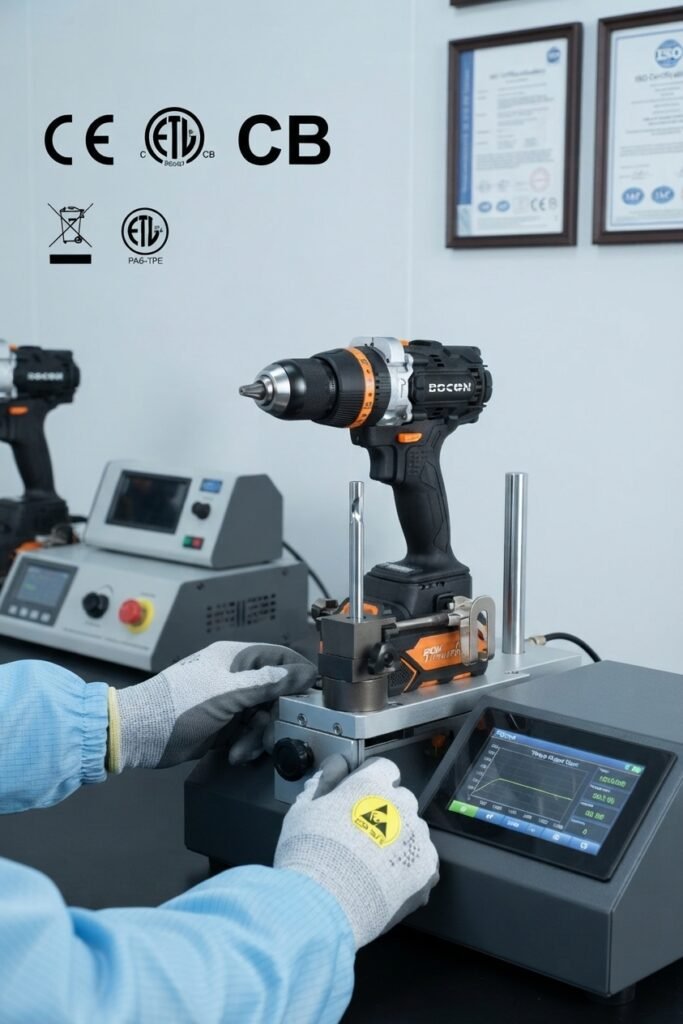
A factory shows you a CE certificate. It looks real. The logo is there, the standard number matches. You ship a container to Rotterdam. Three months later, a market surveillance authority in Germany pulls the product and finds the test report doesn’t match the actual production run. The factory had a CE certificate for a sample — not for the product they’re shipping you.
This is more common than you’d think. We’ve seen it happen to retailers with containers worth hundreds of thousands of dollars. The solution isn’t to trust certificates more — it’s to verify independently. Call the test lab listed on the certificate and confirm. Ask for the test report, not just the certificate.
Problem 2: The sample-to-production gap
You approve a sample. The sample is excellent. You place an order for 5,000 units. The first batch arrives and something is wrong — the torque is lower, the battery housing has a slightly different fit, the color is off by half a shade.
This happens because most Chinese factories run two production lines: one for samples (where every unit gets individual attention) and one for bulk orders (where speed matters more). The best factories — the ones worth working with — don’t do this. They run the same process for every unit, because their quality system doesn’t allow a split.
When we’re asked what separates our production from cheaper competitors, the honest answer is this: we can’t afford to run a separate low-quality line. Every unit that leaves our facility is a reflection of our ISO9001 system. There’s no “sample line” and “bulk line.” There’s one standard.
Problem 3: Communication breakdowns at critical moments
A buyer needs a spec change two weeks before production. They send an email. The factory acknowledges it. Three days later, production starts — and nobody read the email. Or the factory says they’ll handle it, but “handling it” means the production supervisor makes a handwritten note that gets lost in a shift change.
This is where 15 years of experience actually shows. A factory with real export experience has processes for change management — not just “we got your email.” At Bocon, every inquiry goes to our engineering team, not just a sales person. When we say we’ll handle a change, there’s a documented process behind it.
Problem 4: Battery platform lock-in without flexibility
A European retailer decides their private label cordless line will use a 20V platform — same as DeWalt. They find a Chinese factory that can make compatible battery packs. Six months later, they want to add an angle grinder to the line. The factory doesn’t have that tool in their catalog and can’t develop it. The retailer is now locked into a platform with limited expansion options.
The factories that cause this problem are the ones that sell from a catalog rather than build custom tools. The factories worth working with have an R&D team that can develop new tools to match your platform. At Bocon, we have 15 years of in-house R&D experience. When a retailer asks us if we can build a new tool type, the answer isn’t “let me check our catalog” — it’s “give us your specs and we’ll tell you what we can develop.”
The Five Characteristics That Actually Separate Good OEM Partners from Bad Ones
Here’s the practical part. These are the five things I look for when evaluating any factory — including our own competitors.
1. Real battery management system (BMS) capability — not just a chip purchase
This is the single most misunderstood technical specification in the cordless tool industry.
Most buyers know they need BMS protection on battery packs. What they don’t know is that there’s a significant difference between:
- A factory that buys a standard BMS chip and integrates it — this is what the majority of Chinese factories do. It works. It passes basic tests. But it doesn’t adapt to the specific cell chemistry, thermal profile, or discharge characteristics of your actual product.
- A factory that designs and programs their own BMS algorithm — this is rare. It requires engineering talent that most factories don’t have. But it means the protection system is built for your specific tool and battery combination.
Why does this matter for European retail? Because Europe’s product liability standards are among the strictest in the world. If a battery overheats and causes an incident, and your documentation shows you used a generic third-party BMS chip with no adaptation, that’s a legal liability problem.
Bocon has an in-house R&D team that develops our own BMS protection algorithms. This isn’t something we hired a consultant to do. Our engineers built it over years of field testing and refinement. When we tell European retailers that we handle BMS in-house, we can show them the algorithm documentation, the testing records, and the thermal profile data. That’s the difference between a certificate and actual engineering.
2. 100% brushless production — not a mix
This seems obvious, but it matters more than most buyers realize.
A factory that makes both brushed and brushless tools is making a business decision: brushed tools are cheaper to produce, and some buyers still want them. That’s fine — but it means the factory’s engineering focus is split. Brushless motor design, controller programming, and thermal management are specialized skills. When a factory tries to do both, brushless usually gets the leftovers of attention.
A factory that’s 100% brushless has committed to the technology. At Bocon, we don’t make brushed tools. Every engineering resource, every production line optimization, every quality improvement project is focused on brushless. That focus shows up in the product — in motor efficiency, in heat management, in the consistency of torque output across a production run.
For European retailers specifically, brushless also matters for regulatory reasons. The EU’s Ecodesign regulations are pushing toward higher efficiency standards. A brushed motor tool has an inherent efficiency ceiling that brushless doesn’t. If you’re building a product line you want to sell in Europe for the next five years, a factory that takes brushless seriously is a better long-term partner.
3. Gearbox quality — the component nobody checks until it fails
Here’s a technical detail that separates the good from the excellent in power tool manufacturing.
The gearbox is one of the most stressed components in any cordless drill or driver. It transmits all the torque from the motor to the chuck — under load, in heat, for thousands of cycles. Most buyers never look at the gearbox specifically. They look at the drill’s performance specs. If the torque numbers are good and the tool works in a demo, they assume the gearbox is fine.
It usually isn’t — not at the level that European retailers need.
The majority of Chinese factories use standard sintered metal gears. These work fine for light-duty consumer use. For a tool that needs to perform reliably in the hands of a European tradesperson, you need something better.
Bocon uses precision planetary gears with vacuum heat treatment. This is the same process used by premium brands like Panasonic and Puma. The gear surface hardness after vacuum treatment is significantly higher than standard heat treatment, which means longer tool life, less maintenance, and fewer warranty claims.
When a European retailer asks us why our tools cost more than a cheaper competitor, this is one of the things I point to. The gearbox is where you find out whether a factory is building for longevity or for a price point.
4. Supply chain depth — not just production capability
This is the question I wish more European buyers would ask: “How many certified suppliers do you have for each core component?”
Most buyers ask about a factory’s production capacity. That’s important — but it’s only half the question. The other half is: what happens when a component supplier has a problem?
In 2021, when global battery cell prices spiked and availability tightened, factories with a single battery cell supplier had to stop production or pass costs to buyers. Factories with multiple certified suppliers could absorb the shock. That difference showed up in delivery schedules, pricing, and ultimately in which retailers ended the year with stock on shelves.
Bocon maintains 35+ certified backup suppliers for core components. That isn’t a number we put on a website — it’s a deliberate supply chain strategy. When we work with a new European retailer on a multi-year contract, we build that supply chain resilience into the planning from day one. The goal isn’t just to make your first order. It’s to reliably supply your line for the next five years.
5. Field failure data — not just warranty claims
Most factories will tell you their defect rate. Bocon will tell you something more useful: our field failure rate, broken down by component.
We track this because warranty data is lagged — it tells you what went wrong six months ago. Field failure data tells you what’s happening right now, in real use conditions, across our entire client base. When we see a pattern developing in a specific component — even before it becomes a warranty claim — we investigate and correct.
This is the kind of quality infrastructure that separates a factory built for long-term partnerships from one that’s trying to close a deal. We can share this data with European retail partners because we’re proud of it, and because it builds trust that no certificate can replicate.
The Framework: How to Actually Evaluate a Factory From the Inside
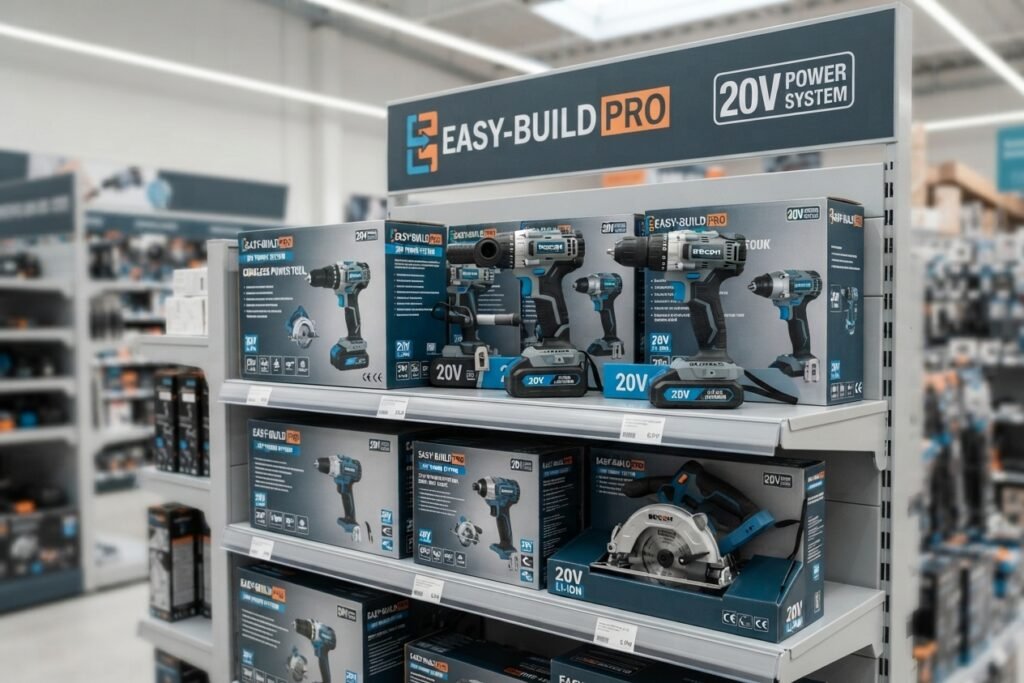
Reading factory profiles is easy. Getting a genuine picture of a factory’s capability is harder. Here’s how to do it properly.
Step 1: Ask for the field failure data
Don’t ask for defect rates from the factory’s own quality report — those are almost always optimistic. Ask for field failure data. A factory that tracks this and can share it with you honestly is operating at a different level than one that doesn’t.
Step 2: Verify certifications independently
If a factory shows you a CE, ETL, or CB certificate, call the issuing body. Check the test report. Verify that the report matches the product you’re ordering. This takes an afternoon and can save you a six-figure loss.
Step 3: Ask about their BMS approach — specifically
Ask: “Do you design your own BMS algorithm or do you integrate a third-party chip?” The factories that design their own will answer this question confidently and can explain the technical reasoning. The ones that integrate a third-party chip will either be vague or dismissive.
Step 4: Visit the factory — or send someone
I know this isn’t always possible. But if you’re building a private label line that represents your brand in European markets, a two-day factory audit is one of the best investments you can make. Look at the assembly lines, not just the showroom. Ask the quality control team, not just the sales manager. Watch how the factory handles a problem on the production floor.
If you can’t visit in person, ask for a live video walkthrough — not a pre-recorded tour. The factories that are proud of their facility will do it. The ones that aren’t will give you reasons why they can’t.
Step 5: Test samples under real load conditions
Test a sample drill against your actual use case — not just a desk test. Run it at full load for extended periods. Test the battery through multiple charge cycles. Check the gearbox for unusual noise after 20 minutes of continuous use. The factories that know their products will welcome this testing. The ones that don’t will try to rush you past it.
The Honest Assessment: What Makes Us Different at Bocon
I’ve spent most of this article talking about what to look for in any factory — not specifically about us. That’s intentional. If you’re evaluating OEM partners for your European private label line, you should have the tools to evaluate any of them, including us.
But if you’re still reading, here’s what I can tell you about why European retailers work with us specifically:
We’ve been at this for 15 years. Our founder came from 15 years of R&D experience in cordless tools before establishing this factory in 2017. That R&D background shapes everything we do — including how we approach new product development for retail partners.
We operate at 100,000 units per month. That’s enough capacity to serve major retail lines without stretching. It’s not so large that you become a number in a queue. European retail buyers who work with us tell us that the communication is different from larger factories — faster, more direct, more engineering-focused.
We have ISO9001, CE (MD+LVD+EMC), ETL, RoHS, UN38.3, and CB certifications — and we can walk you through every test report, not just show you the certificate.
We’ve maintained zero after-sales complaints since establishing the factory. That’s not a marketing line — it’s a quality system result that we track and report to our partners. We know what we’re capable of because we measure it.
Our BMS algorithms are developed in-house. Our engineering team builds and tests the protection logic that sits inside every battery pack we produce. We don’t buy this off a shelf.
We develop tools to your platform specification. If you want a 20V brushless angle grinder that fits your existing battery system, we can build it. If you want a new platform from scratch, we’ll work with you on the design.
We maintain 35+ certified backup suppliers for core components. Supply chain resilience isn’t an afterthought — it’s part of how we plan every retail partnership.
If any of that is relevant to what you’re building, reach out to us directly. We don’t do high-pressure sales. We do engineering conversations and honest quotations.
You can find us at www.oemcordlesstools.com or email shawn@oemcordlesstools.com.
What This Article Can’t Tell You
I want to be straight about the limits of this piece.
I can’t tell you which factory is right for you, because I don’t know your volume, your platform, your price target, or your quality expectations. What I can tell you is what to look for — and that’s what I’ve tried to do here.
The best OEM partner for a French independent retailer building a small private label line isn’t necessarily the same as the best partner for a German retail chain stocking 50,000 units per year. The characteristics are the same; the fit depends on your specifics.
What I can tell you is that the factories worth working with share certain traits — genuine engineering capability, not just marketing; field-tested quality data, not just certificates; supply chain depth, not just production speed; and honest communication, even when the answer is “we can’t do that.”
If you’re evaluating manufacturers for your European private label cordless tools, use this article as a checklist. The factories that score well on all five characteristics are the ones worth taking seriously.
And if after going through that process, you want to have a direct conversation with us, we’re ready.
This article was written by the Bocon export team — cordless tool specialists, not content marketers. If you have technical questions about OEM cordless tool manufacturing for European retail, reach out to us directly.